
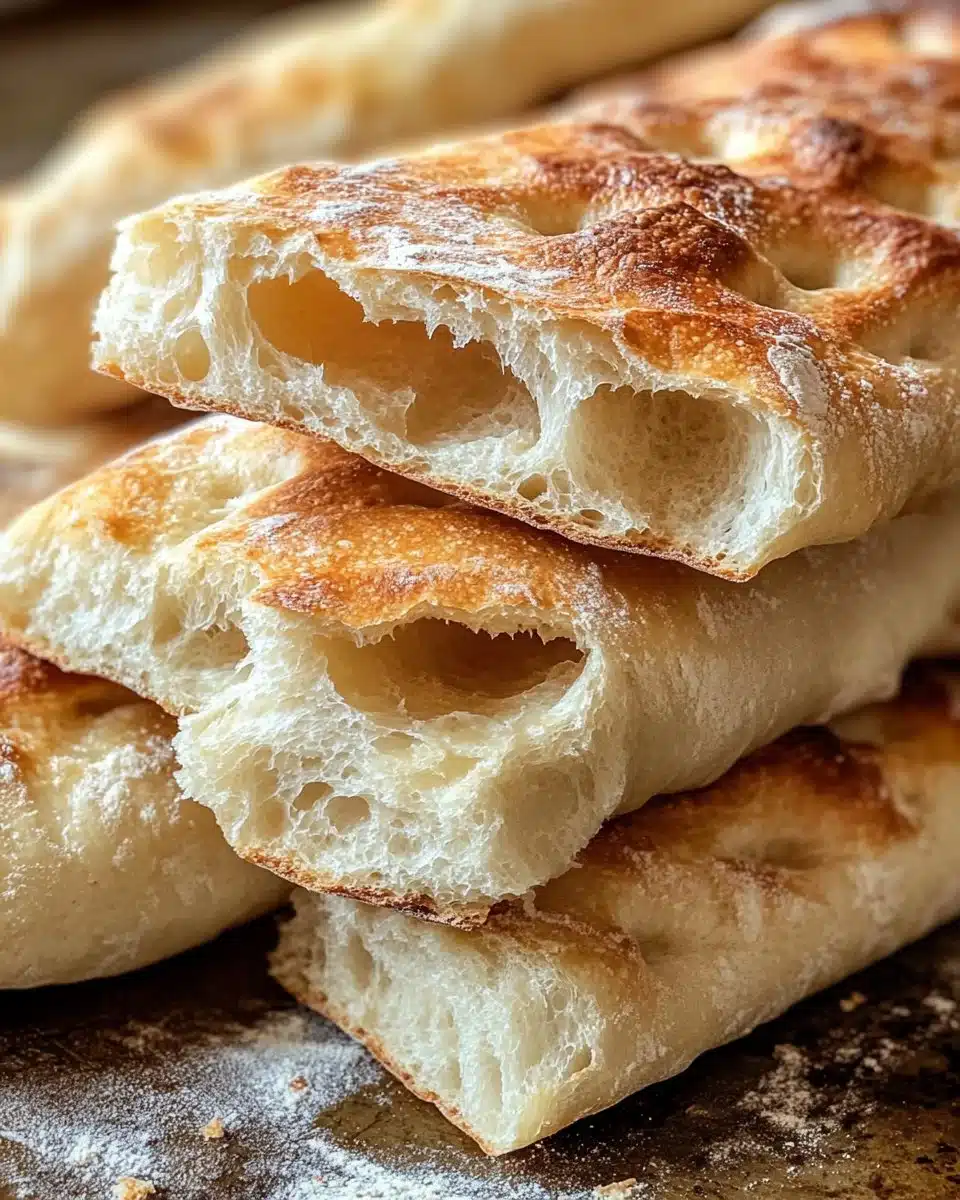
If you like simple homemade bread, this ciabatta is a great choice. It makes a light, open crumb and a crisp crust. If you want a different home-baked loaf later, try the homemade cinnamon swirl bread recipe for a sweet change.
introduction
This ciabatta recipe uses a biga (a pre-ferment) and a wet, sticky dough. That feel is normal. The long rest and folding build flavor and the open holes inside the bread. You will need time, but not much heavy work. Most of the time the dough rests on its own. You get rustic loaves or rolls with a chewy inside and a thin, crisp crust. This recipe works well if you want fresh bread for sandwiches, dipping, or as a side for soup.
Why You’ll Love This Homemade Ciabatta Bread
You will love this bread because it tastes like bakery ciabatta but uses simple steps. The crust becomes crisp and golden while the inside stays soft and full of holes. The wet dough gives that airy texture. You do short, gentle folds instead of long kneading. The recipe fits beginners and home bakers who want good results without hard work. It also keeps well for several days if you store it right.
Why Make This Recipe
This method uses a biga for more flavor and a gentle handling method for big holes. The biga sits for 8–24 hours and adds a slightly tangy, rich note. The long rests let the gluten relax and form structure slowly. You can shape the dough into rolls or loaves. You do not need any special ingredients. Just flour, water, yeast, salt, and a little olive oil for handling. The final bake uses steam (ice cubes) to help a crisp crust form.
What You Need for Homemade Ciabatta Bread
You do not need special tools. Here is what helps:
- Large mixing bowls (one for the biga, one for the dough).
- Silicone spatula or wooden spoon to mix.
- Plastic wrap to cover the bowl.
- Bench scraper or knife for cutting pieces.
- Parchment paper for baking and easy transfer.
- A rimmed baking sheet or flat cookie sheet to preheat in the oven.
- A metal pan or cast-iron skillet for ice cubes to make steam.
- Instant-read thermometer (optional) to check 205–210°F for doneness.
- Olive oil for greasing hands and tools.
These items make the process easier and cleaner, but you can adapt with what you have.
How to Make Homemade Ciabatta Bread
The big steps are simple: make the biga, make the dough, stretch and fold, shape, and bake with steam. I will walk you through each part with clear steps and small tips.
- Make the biga and let it sit. This adds taste and strength to the dough.
- Mix the final dough with the biga, flour, water, yeast, and salt. The dough will be sticky. That is good.
- Let the dough rest and do a series of stretch-and-folds to build structure without heavy kneading.
- Chill the dough briefly to relax and firm it up for easier handling.
- Flour the work surface and gently shape the dough into rectangles for rolls or loaves.
- Let the dough proof at room temperature until it puffs up.
- Preheat your oven and baking surface so the bread gets a strong initial oven spring.
- Add ice to a metal pan to create steam, slide the dough into the hot oven, and bake until deep golden.
- Cool the bread well before cutting to avoid a gummy inside.
These steps match the full directions below. Move carefully and be gentle when handling the dough to keep the air bubbles.
Ingredients:
- 1 cup (130g) bread flour (I use this), spooned & leveled
- 1/8 teaspoon active-dry or instant yeast
- 1/2 cup (120g/ml) room-temperature water (about 70°F (21°C))
- 1 teaspoon (3g) active-dry or instant yeast
- 1 cup (240g/ml) warm water (about 100–110°F (38°–43°C))
- 2 and 1/2 cups (325g) bread flour (spooned & leveled), plus more as needed
- 1 and 1/2 teaspoons (8g) table salt
- Olive oil, as needed for coating hands and spatula
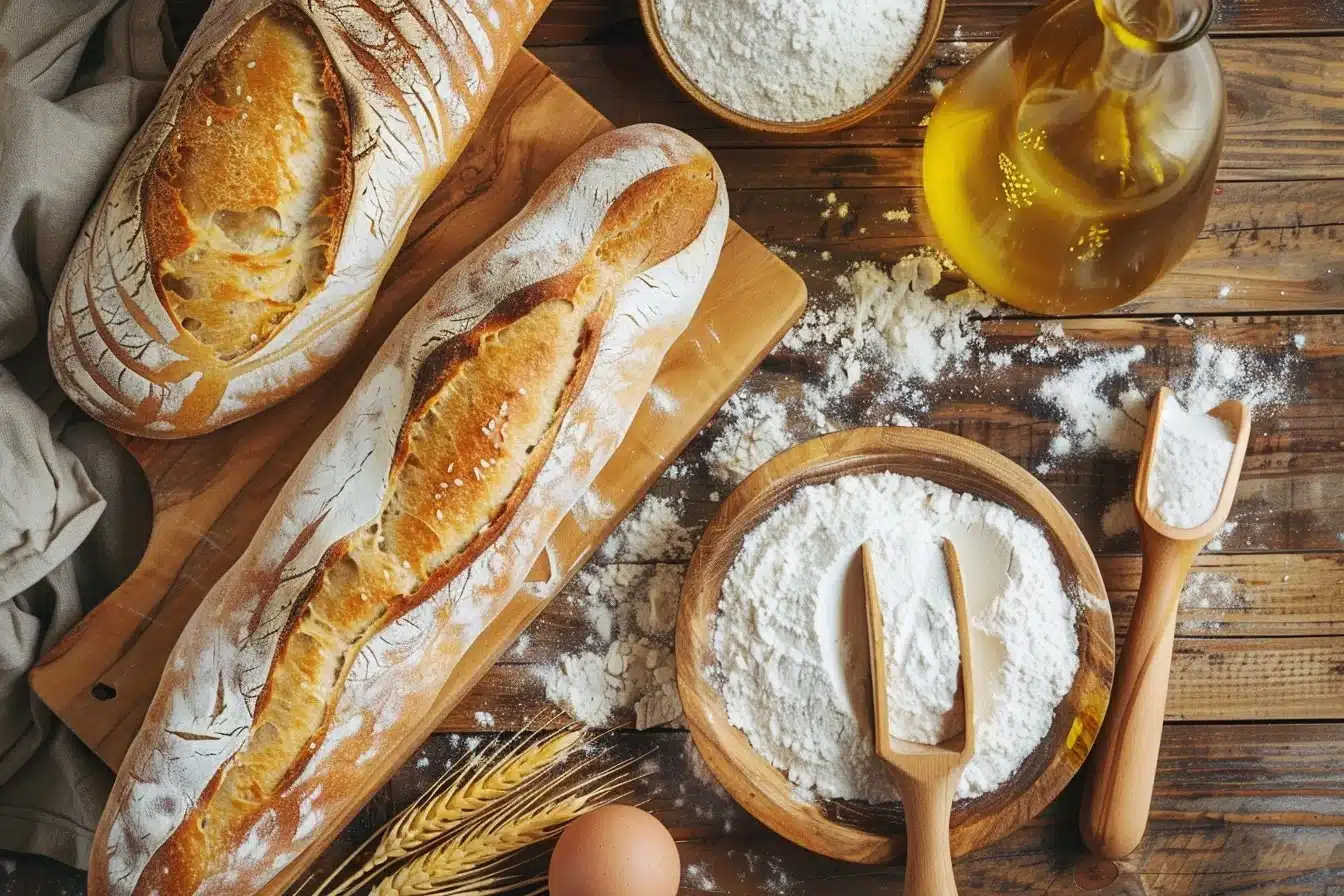
Directions:
- Make the biga. In a large mixing bowl, whisk together the 1 cup (130g) bread flour and 1/8 teaspoon yeast. Add 1/2 cup (120g/ml) room-temperature water and mix with a silicone spatula until combined. Cover the bowl tightly with plastic wrap and let rest at room temperature for 8–24 hours. This slow ferment adds flavor.
- Mix the dough. Uncover the bowl with the biga. In a separate large mixing bowl, or the bowl of a stand mixer fitted with a dough hook, whisk together 1 teaspoon (3g) yeast and 1 cup (240g/ml) warm water. Cover and let sit 5–10 minutes until the yeast dissolves. Add the biga, 2 and 1/2 cups (325g) bread flour, and 1 and 1/2 teaspoons (8g) table salt. Gently mix with a silicone spatula or use the dough hook on medium. The dough will seem dry and shaggy at first; keep working it until the flour is moistened and the dough looks uniform. If needed, lightly grease your hands with olive oil and knead gently in the bowl. The dough will be wet and sticky; that is normal and fine.
- First rest. Cover the bowl and let the dough rest 30 minutes at room temperature.
- Stretch and fold series. Visualize a clock on top of the dough. With an olive oil-greased spatula or lightly oiled hands, lift the dough at the 12 o’clock spot and stretch it up, then fold it down toward the 6 o’clock side. Turn the bowl 90 degrees and repeat. Go around twice for a total of 8 folds. Cover and rest 30 minutes.
- Repeat folds. Do the stretch-and-fold step three more times, resting 30 minutes between each. After the 4th fold, cover and place the bowl in the refrigerator for at least 1 hour and up to 24 hours. Chilling helps shape later.
- Shape the dough. Very generously flour your counter. Using lightly oiled hands or a spatula, gently scrape the dough onto the floured surface. Sprinkle flour on top. Shape into a rough rectangle about 10×7 inches. For 8 rolls: cut into 8 pieces about 2.5×3.5 inches each. For 2 loaves: cut in half for two 5×7-inch rectangles.
- Transfer to parchment. Lightly flour a piece of parchment. Using a floured bench scraper and floured hands, lift the pieces and place them on the parchment at least 2 inches apart. Be gentle so you do not deflate the dough. If pieces lose shape, reshape gently into rectangles. Lightly sprinkle flour over the rolls and cover with a clean towel or parchment. Let rest at room temperature for 1 hour.
- Preheat oven. Position one rack in the bottom and one in the middle. Place a flat cookie sheet or rimmed baking sheet on the center rack. Preheat oven to 450°F (232°C). Heat the oven and baking surface for about an hour for best oven spring.
- Bake with steam. When ready, scatter several cups of ice cubes in a large shallow metal roasting pan, cast-iron skillet, or rimmed baking sheet (do not use glass). Uncover the rolls and lightly spray or flick them with water (optional for extra steam). Working quickly, carefully remove the preheated baking sheet and slide the parchment and bread onto it. Place back in the oven. Slide the pan with ice cubes onto the bottom rack and close the oven to trap steam.
- Bake and test. Bake 20–22 minutes, or until the bread is golden brown. Many bakers extend to 25 minutes for deeper color. Tap the bread—if it sounds hollow, it is done. Or check with an instant-read thermometer: 205–210°F (96–99°C).
- Cool. Remove the rolls and cool at least 45 minutes before slicing. Cutting too early may make the crumb gummy.
- Store. Store leftovers loosely covered at room temperature up to 5 days or in the fridge up to 1 week.
Best Ways to Serve Homemade Ciabatta Bread
Ciabatta works with many foods. Slice it wide and toast for sandwiches. Use it for panini with melted cheese and deli meats. Tear it and dip in olive oil with a pinch of salt and herbs. It pairs well with soups and stews because the bread soaks up broth without falling apart. You can also slice and brush with olive oil and garlic, then toast for a quick crostini.
How to Store Homemade Ciabatta Bread
Store the bread loosely covered at room temperature for up to 5 days. Use a paper bag or a cloth bag so the crust stays crisp. For longer storage, slice and freeze in a sealed bag for up to 3 months. To use frozen slices, toast directly from frozen or thaw at room temperature. Avoid tight plastic wrap at room temperature for long times; it softens the crust but will keep the crumb moist.
Easy Tips to Make Homemade Ciabatta Bread
- Use a scale for more reliable results. Weighing flour gives consistent dough.
- Keep your hands lightly oiled when you touch the dough. This stops sticking without adding more flour.
- Do not add too much flour. The dough should stay wet and sticky. Extra flour makes the crumb dense.
- Give the biga enough time (8–24 hours) for best flavor.
- Be gentle when moving the dough. Big bubbles give the open crumb; rough handling can push the air out.
- Preheat the baking surface for best oven spring and crust.
- Use ice or a metal pan with water at the bottom of your oven to get a crisp crust.
Try These Variations of Homemade Ciabatta Bread
- Olive and rosemary: Add chopped olives and 1–2 teaspoons fresh rosemary to the final mix.
- Whole grain mix: Replace up to 1 cup of bread flour with whole wheat; this yields a nuttier taste.
- Garlic and herb: Rub dough with a little garlic olive oil before the final rest for a mild garlic flavor.
- Seeded top: Sprinkle sesame, poppy, or flax seeds on the dough just before baking.
- Cheese ciabatta: Fold in small pieces of Parmesan or cheddar for a cheesy loaf.
Common Questions About Homemade Ciabatta Bread
Q: Why is my dough so sticky?
A: Ciabatta dough is meant to be wet and sticky. Use oiled hands and a bench scraper. A sticky dough gives the open crumb. Do not add too much flour.
Q: Can I use instant yeast instead of active dry yeast?
A: Yes. The recipe allows either. For instant yeast, you can mix it directly with the flour and water. For active dry, dissolve in warm water first as the directions show.
Q: What if my bread is not hollow when tapped?
A: If it does not sound hollow, bake a few more minutes. You can also check with an instant-read thermometer; the center should read 205–210°F (96–99°C).
Q: Can I skip the biga step?
A: You can skip it, but the bread will have less flavor and a slightly different texture. The biga gives better taste and a more open crumb.
Q: How do I get bigger holes inside?
A: Handle the dough gently and avoid deflating it. Use wet hands and stretch-and-fold rather than heavy kneading. A high hydration dough also leads to larger holes.
Final Thoughts
This ciabatta recipe gives you a real bakery feel at home. The method uses time instead of heavy work. Follow the rests and the gentle folds, and you will end with light, airy bread and a crisp crust. It takes patience, but the result is worth it.
Ready to Give It a Try?
Set aside time for the biga and the folds, and enjoy the process. Make a batch this weekend and use it with olive oil, sandwiches, or soup. Homemade ciabatta is a simple way to learn how dough, time, and steam make great bread.
Print
Homemade Ciabatta Bread
- Total Time: 85 minutes
- Yield: 8 servings 1x
- Diet: Vegetarian
Description
A light, open crumb and crisp crust, this ciabatta recipe features a biga for added flavor and a easy handling method for delicious bread.
Ingredients
- 1 cup (130g) bread flour, spooned & leveled
- 1/8 teaspoon active-dry or instant yeast
- 1/2 cup (120ml) room-temperature water (about 70°F / 21°C)
- 1 teaspoon (3g) active-dry or instant yeast
- 1 cup (240ml) warm water (about 100–110°F / 38°–43°C)
- 2 and 1/2 cups (325g) bread flour, spooned & leveled, plus more as needed
- 1 and 1/2 teaspoons (8g) table salt
- Olive oil, as needed for coating hands and spatula
Instructions
- Make the biga: In a large mixing bowl, whisk together the 1 cup bread flour and 1/8 teaspoon yeast. Add 1/2 cup room-temperature water and mix until combined. Cover and let rest at room temperature for 8–24 hours.
- Mix the dough: In a separate bowl, whisk together 1 teaspoon yeast and 1 cup warm water. Cover and let sit 5–10 minutes. Add the biga, 2 and 1/2 cups bread flour, and 1 and 1/2 teaspoons salt. Mix until uniform; the dough will be sticky.
- Rest: Cover the bowl and let the dough rest for 30 minutes at room temperature.
- Stretch and Fold Series: Lift the dough at the 12 o’clock spot and fold it down to the 6 o’clock side. Turn the bowl 90 degrees and repeat, completing a total of 8 folds. Cover and rest 30 minutes.
- Repeat the folding method 3 more times, resting for 30 minutes between each. After the 4th fold, chill the dough in the fridge for 1 hour to up to 24 hours.
- Shape the dough: Flour your counter generously. Gently scrape the dough onto the floured surface, shape into a rectangle, and cut into 8 pieces or 2 loaves.
- Transfer to parchment: Place shaped dough on floured parchment and let rest covered for 1 hour.
- Preheat the oven: Preheat oven to 450°F (232°C) for 1 hour.
- Bake with steam: Scatter several cups of ice cubes in a pan. Uncover the rolls, quickly slide onto the preheated baking sheet, and place pan with ice cubes on the bottom of the oven.
- Bake for 20-25 minutes until golden brown and has a hollow sound when tapped.
- Cool: Let the bread cool for at least 45 minutes before slicing.
Notes
Store leftovers loosely covered at room temperature for up to 5 days.
- Prep Time: 60 minutes
- Cook Time: 25 minutes
- Category: Bread
- Method: Baking
- Cuisine: Italian
Nutrition
- Serving Size: 1 roll
- Calories: 200
- Sugar: 0g
- Sodium: 200mg
- Fat: 3g
- Saturated Fat: 0g
- Unsaturated Fat: 3g
- Trans Fat: 0g
- Carbohydrates: 40g
- Fiber: 2g
- Protein: 7g
- Cholesterol: 0mg